
During 2025/26, SoMi Academy worked with 20 primary schools across Liverpool City Region to develop access to high-quality music-making in the Early Years.
Supported using public funding by Arts Council England and made possible thanks to National Lottery players, the project combined specialist delivery for children with teacher CPD, small-group instrumental learning and the development of resources designed to help music continue beyond the funded programme.
Working across Liverpool, Halton, Warrington, St Helens, Sefton and Knowsley, the project enabled us to test and develop our Early Years approach across a wide range of school settings, including communities experiencing high levels of deprivation and historically low engagement with music provision.
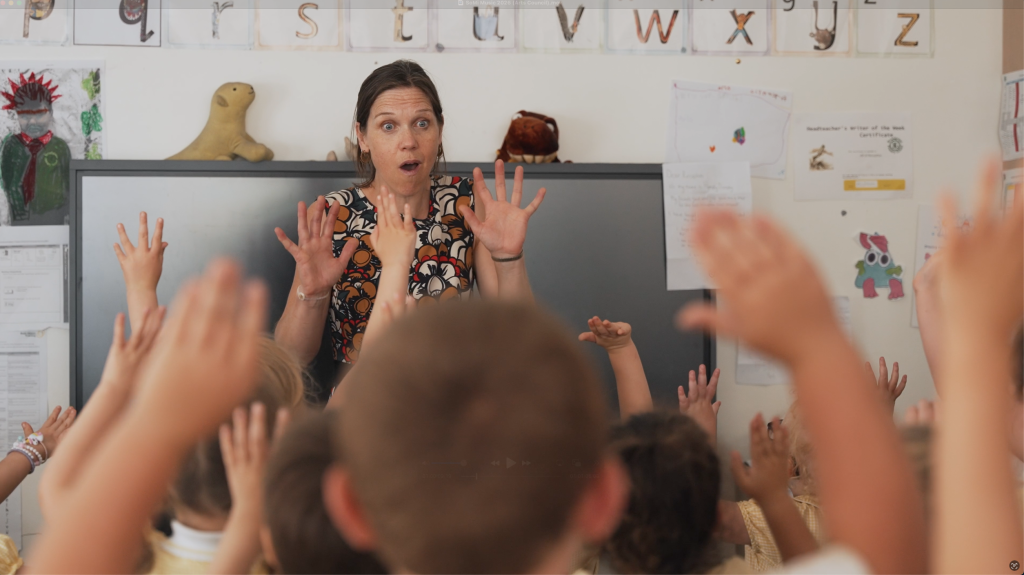
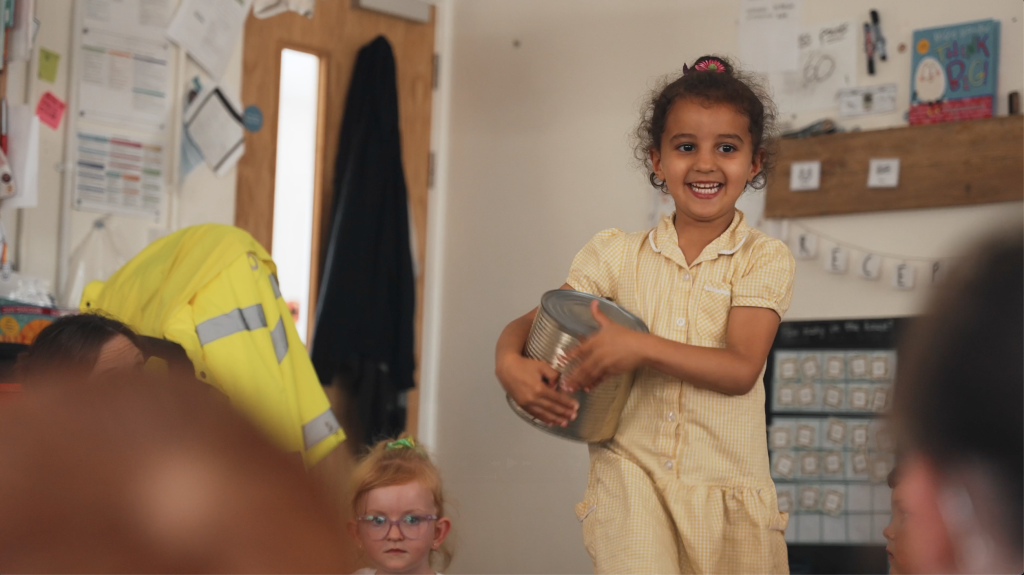
Our project film follows the programme into participating schools and captures children, teachers and SoMi practitioners taking part in the work.
What did the project involve?
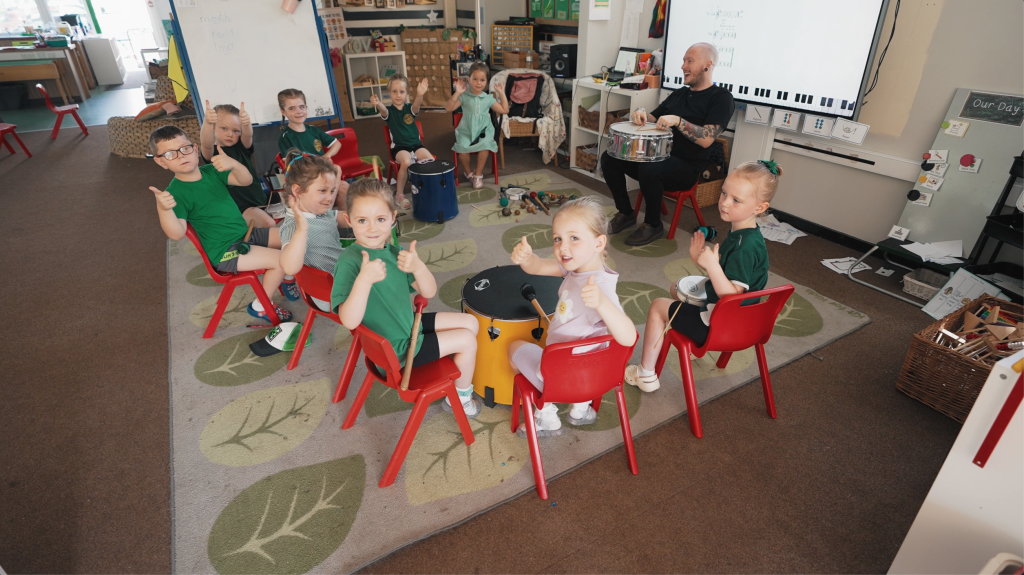
At the heart of the project was practical music-making.
Children explored music through singing, movement, listening, creativity and instrumental learning, with activity designed specifically around the needs and development of Early Years pupils.
Across the 20 participating schools, the programme included:
- specialist Early Years music, movement and creativity sessions
- small-group instrumental learning using the Dogs & Birds approach to piano
- in-class training and support for school staff
- dedicated Early Years CPD
- access to developing SoMi digital music and CPD resources
- opportunities for children to share and celebrate their musical development
Alongside direct delivery, an important aim was to build teachers’ confidence to use music independently.
Rather than creating provision which disappears when a specialist leaves the classroom, we wanted to explore how specialist input, practical CPD and accessible resources could leave schools better equipped to make music part of everyday Early Years practice.
The project in numbers
By the end of the programme:
20 schools participated across Liverpool City Region
1,124 people participated in project activity in person
78 creative and cultural practitioners contributed or took part
562 people used the project’s digital resources
17,645 people were reached through digital audiences
The project also brought together investment and support from Arts Council England, Sound! Music Hub, Resonate, participating schools, SoMi Foundation and SoMi Academy CIC.
What difference did it make?
Feedback from participating schools highlighted a combination of musical development, increased confidence and greater participation.
Teachers reported improvements including listening and concentration, rhythm and pulse awareness, coordination, following musical instructions, group participation and children’s willingness to perform or share what they had learned.
Some of the most valuable feedback concerned children who might not ordinarily find it easy to participate in larger-group activities.
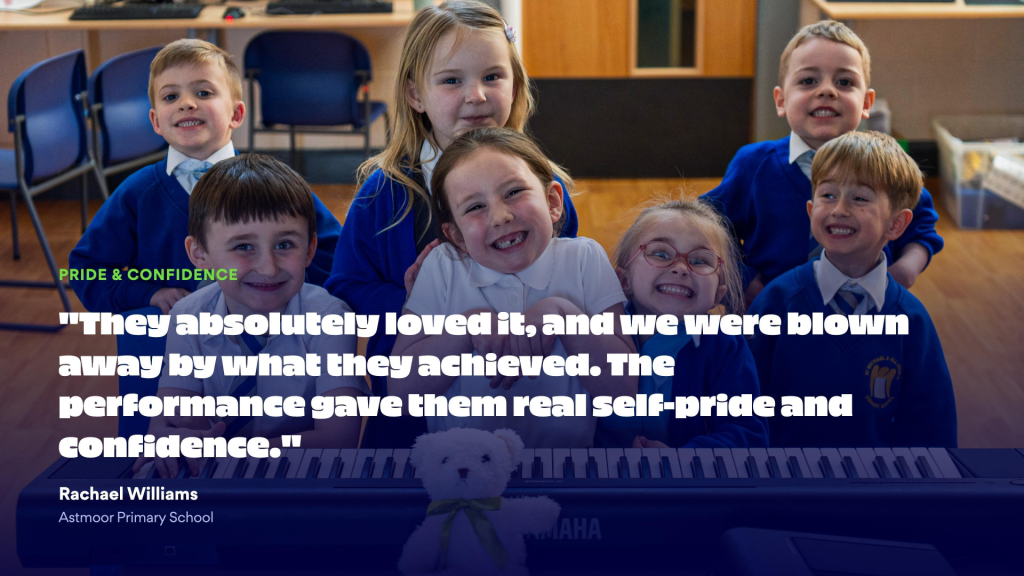
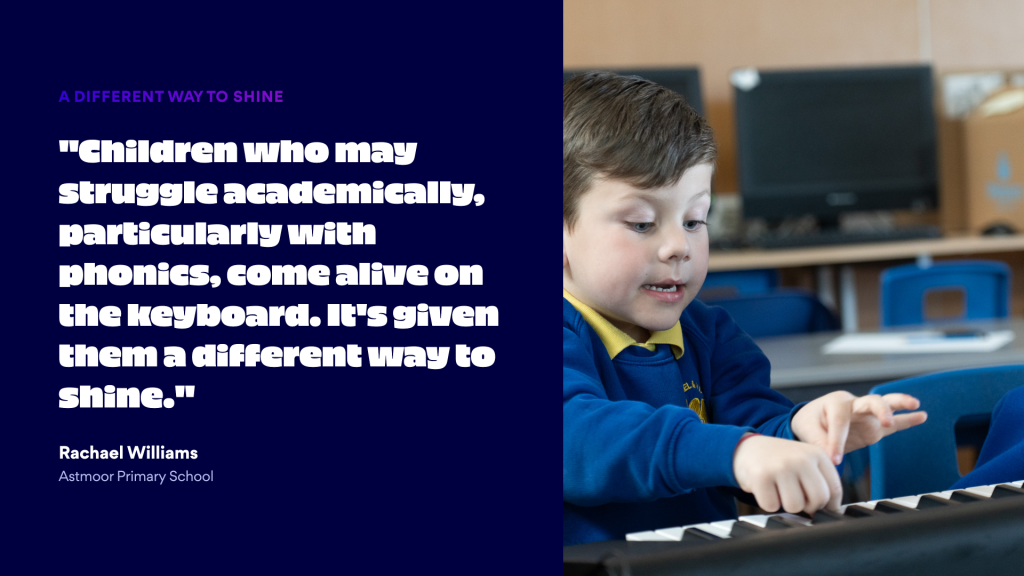
At Whitefield Primary School, staff described a usually quiet child who struggled to engage in larger groups but became particularly engaged by playing the keyboard. Across the programme, staff saw increased confidence alongside “lots of joy and excitement” during the sessions.
At Heygreen Primary School, a class teacher described the experience of a non-verbal child who would not normally engage with much of the class’s carpet-based group activity:
“He looked forward to the music lessons each week, joined in well and even performed in the show with his friends. He was so proud of himself!”
Experiences like these are an important reminder that the value of Early Years music isn’t limited to developing musical knowledge and skills. Done well, making music together can create another way for children to participate, communicate and experience success.
“The sessions made music accessible for all children, they felt like musicians!”
Class teacher, Heygreen Primary School
Supporting the adults around the children
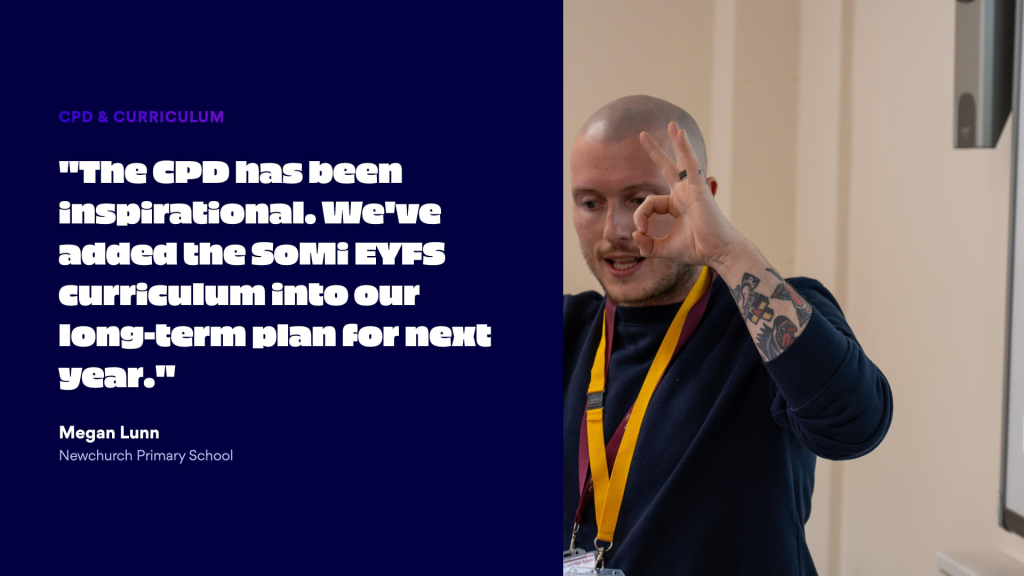
Teacher development was just as important as direct delivery.
By combining children’s sessions with CPD and in-class support, we wanted to leave teachers better equipped and more confident to make music part of everyday Early Years practice.
Feedback suggests that combination was particularly valuable.
Whitefield Primary School’s Early Years Lead told us:
“The children’s sessions and CPD for staff have gone perfectly hand in hand to bring musical learning to the forefront in school.”
Schools also valued the ability of practitioners to adapt.
Whitefield highlighted how sessions were made inclusive for different children and how practitioners responded flexibly to changes within school. St Patrick’s similarly praised the way both the programme and CPD were tailored to its particular needs.
At Kew Woods, when asked what should be retained in future projects, the response highlighted both the practical percussion sessions for children and the support for teachers from a music specialist.
This reinforced one of the central lessons from the project. Providing schools with resources is useful, but sustainable change also depends on giving teachers the confidence to use them.
What did schools tell us?
Our end-of-project evaluation gave us an opportunity to hear directly from participating teachers and music leads.
Among the seven schools represented in the feedback received:
- 100% said they would recommend SoMi Academy’s Early Years music provision to another school
- schools described positive impacts on confidence, enjoyment of music, listening, concentration, coordination, rhythm and pulse, group participation and willingness to perform
- several specifically identified benefits for quieter children and children with additional needs
- schools valued the combination of direct pupil activity and professional development for staff
- flexibility and the ability to adapt sessions to individual school and pupil needs emerged as recurring strengths
At Newchurch Primary, children went on to perform on stage at the school’s festival, with their teacher reporting a clear increase in their confidence when performing.
And at St Finbar’s, the response from the children themselves was rather more straightforward:
“The children really loved the percussion, they keep asking when Josh is coming back with the drums!”
What did we learn?
One of the clearest findings was that there is no single model that works for every Early Years setting.
Timetables, physical spaces, SEND needs, staff confidence, existing music provision and available resources varied considerably. Our practitioners therefore needed to adapt delivery while maintaining a consistent musical approach.
The school feedback strongly supported that flexible model. Newchurch praised the way activities were adapted so that all children could access and enjoy them, while Whitefield highlighted both inclusion and practitioners’ flexibility in responding to the realities of school life.
We also saw how important teacher confidence is.
High-quality resources are valuable, but resources alone don’t necessarily give a non-specialist teacher the confidence to sing, move, demonstrate musical ideas or make music alongside a class.
Combining practical delivery with in-class support and CPD proved particularly important.
The project also gave us an opportunity to test our developing digital and Music EdTech resources in real classrooms. Feedback from schools directly informed further development and helped us better understand what teachers need from technology if it is genuinely going to support, rather than complicate, classroom music-making.
Rethinking performance in the Early Years
Another important area of learning concerned performance.
Our original plans anticipated more formal sharing and performance opportunities across participating schools.
In practice, some schools felt that a conventional performance wasn’t the most appropriate way for very young children to demonstrate their progress.
That led to several different approaches.
Some schools shared videos with families. Others used informal classroom performances. Some developed a ‘live lesson sharing’ format, allowing parents and the wider school community to experience what children had been learning without placing unnecessary pressure on pupils.
Elsewhere, more traditional performances worked extremely well.
The experience reinforced an important principle for our future work: the way children’s progress is celebrated should respond to the children and the school context, rather than being prescribed in advance.
Bringing the learning together
The project concluded with a celebration bringing together practitioners, partners and the wider learning developed through the programme.
As well as celebrating the work taking place in schools, the event created an opportunity to share practice and consider what sustainable Early Years music provision might look like beyond an individual funded project.
What happens beyond the project?
One of the most important outcomes has been what the project leaves behind.
Relationships developed with all 20 participating schools, alongside stronger partnerships with Sound! Music Hub and Resonate.
The evidence and learning generated through the programme has also contributed to further development around Early Years CPD, inclusive ensemble provision, Music EdTech and musical progression.
For SoMi, the project has provided a much stronger evidence base for what successful Early Years music can look like across very different school communities.
It has also reinforced four principles that will shape our next stage of work:
Start with real music-making.
Give teachers confidence, not simply more resources.
Build flexibility around the needs of individual schools and children.
Plan for what remains after funded delivery ends.
The project may have finished, but the partnerships, resources and learning developed through it will continue to inform our work with schools across Liverpool City Region during 2026/27 and beyond.
Thank you
We’re grateful to the children, teachers, school leaders, practitioners and partners who contributed to the project, and particularly to the 20 participating schools who welcomed our team into their communities.
This project was supported using public funding by Arts Council England.
Partner Schools
- Astmoor Primary School – WA7 2JE
- Weston Primary School – WA7 4RA
- Runcorn All Saints CE Primary – WA7 1LD
- Victoria Road Primary School – WA7 5BN
- Woodside Primary – WA7 5YP
- St Clement’s – WA7 4NX
- Oakfield Primary – WA8 8BQ
- Holy Family Catholic Primary School – WA8 5DW
- Whitefield Primary School – L6 2HZ
- St Patrick’s Primary School – L8 5UX
- Broadgreen Primary School – L13 5UE
- St Finbar’s Catholic Primary School – L8 9RY
- Dovedale Primary – L18 1JX
- Heygreen Primary – L15 4N
- Thomas Gray Primary School – L20 4LX
- Kew Woods – PR8 6JW
- Our Lady of Compassion Primary – L37 3LN
- Thatto Heath Community Primary School – WA9 5QX
- Newchurch Primary – WA3 4DX
- St Thomas’ Primary School – WA4 2AP